mardi 18 février 2014

Provence-Alpes-Côte d’Azur

A region Provence-Alpes-Côte d’Azur (PACA) is located between the Rhodan River and the French border with Italy. The capital city of this region is Marseille. The most famous here are French Riviera with Saint Tropez, Cannes, Antibes or Nice. However, as the name itself suggests, it is also a wellknown because of its lavender fields Provence and amazing Alpes. The region is gifted by the nature : one may find here both Mediterranean flora and beaches or picturesque fields.
Provence’s climate is typical for Mediterranean countries, where summers are hot and winters mild and warm. One may here reach the see straight from the mountains. There are many villages and small towns as well as numerous nature reserves spread along the sea shore. For those who love nature there are such places as the biggest in Europe Big Canyon du Verdon on Camargue National Parc and, of course, Valensole plain, especially to be visited in
July or August because of its characteristic lavender fields. This incredible region in southern France has attracted tourists from all over the world for years. Worth seeing are also Saint Tropez, Toulon, Cannes, Marseile, Gordes or a beautiful village where artists from many countries arrive – Saint Paul de Vence.
French Riviera is a beautifully shaped part of the Med. It’s the most important touristic region in France, visited by ca. 10 mln tourists each year. The whole shore is covered with hotels and marinas as well as public beaches and the biggest casinos. Despite of the fact that this place is heavily exploited, it hasn’t lost any of its charm and beauty at all.
Furthermore, as the name itself indicates, there are also the Alpes, where one may admire the breathtaking views of the mountains. Although they are mostly visited during winter, the Alpes attract people willing to walk or ride a bike also in summer. It is worth walking on the tourist routes and downhill routes around Mount Blanc. During summer it is possible to sail, walk or glide in Annecy, Thonon-Les-Bains or Chambery. One may enjoy the eyes with fairy tale-like views or take a walk on narrow roads in the mountains and the nearby villages.
The regien is shrouded with multiple tastes, smells and colours and it enchants any season of the year. Whoever visits this place once, they will be inclined to come back at any occassion.


samedi 1 février 2014

Aquitaine

 Aquitaine is located in the South-West of France and is one of the greatest regions of the country: be it because of its five départements (Gironde, Dordogne, Landes, Lot et Garonne and Pyrénés-Atlantiques) or its various landscapes. 
The endless beaches of the Atlantic Ocean, the hills of the Périgord, the Pyrénées mountains, the vineyards of Bordeaux: the landscapes are diverse and characterful.
Seaside, mountains, a mild and sunny climate with just enough rain to preserve the greenery. Aquitaine will surprise you by its diversity, its cities and towns, its castles, a magnificent coastline, rich rural regions and untouched natural spaces as well as by its traditions and gastronomy.
Gironde, Landes and Pyrénées-Atlantiques have altogether more than 250km of white sand along the Atlantic Ocean were prestigious sea resort are vying with each other (Arcachon, Cap-Ferret or Capbreton). 
Another specificity of the region is the Arcachon Bassin, an inland sea of almost 1500 ha dominated by Europe's biggest dune: the Dune du Pilat.
For those preferring the mountains to the seaside, the Pyrenées will offer their ski resort to skiers of every level in the winter and beautiful hiking possibilities in the summer. The National Parc and its protected fauna and flora will welcome you for unforgettable tours. The Landes de Gascogne have Europe's largest maritime pine forest. The immense forest covers a triangle with a base of 150km and a side of 200km. Isn't that a beautiful place for nature lovers? 
At the very heart of the lands, the villages are some of the most beautiful villages of the country and are listed as Unesco World Heritage sites as well as the famous Lascaux caves, the Santiago de Compostela path or the Jurisdiction of Saint-Emilion.


Alsace


Alsace is the smallest French region, located between the Rhine and the Vosges mountains. It seduces by the beauty of its picturesque towns and their colourful and flowered houses. Alsace's savoury cuisine, its storks and its vinyards explain its celebrity. The county town Strasbourg houses the European Council, the European Parliament and the European Human Rights Court. The inner-city has been listed as an Unesco World Heritage site.

Alsace produces well-known white wines and foie gras. The people is considered honest and harsh. This region is at a strategic point causing numerous conflicts between French and Germans. That is why both cultures impregnate the region. Its inhabitants have theur own indivuality: they consider themselves first as Alsatians, then European and lastly as French.

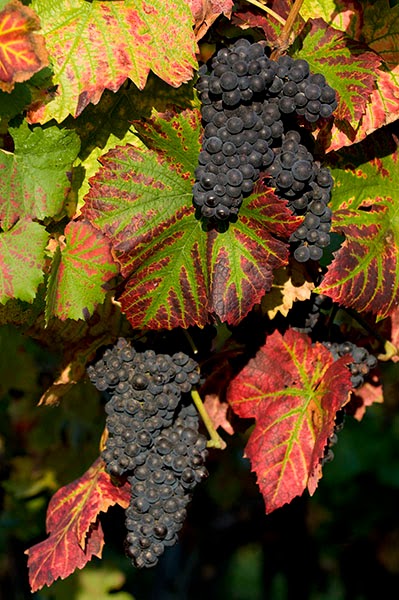
By taking its reputed "Wine Route" (Route des Vins) one discovers the rich vineyards. The wine comes from seven different, mainly white, grapes. Among them: Riesling, Pinot Blanc and Muscat.

The Wine route is 160km long between the Vosges and the Rhine Valley. Colourful and picturesque, one discovers vineyards, little castles, ruins and a few solitary turrets. One will come along charming cities and towns (Colmar, Eguisheim, Kaysersberg, Ribeauvillé, Riquewihr) where paved streets, colourful places and small house with arranged flowers on balconies, window and door sills please the eye. 
Alsace is a fascinating and magical world. While walking through the street of small Alsatian towns one has the feeling of living something unreal. Everything is colourful: the facades, the roofing tiles, the chimneys, doors and balustrades.  
It is a region with of an extraordinary beauty, a great history and a remarkable architectural heritage. Even the most exigent tourist will find something satisfying.
This little enchanted land is worth the trip!

mardi 21 janvier 2014

Vallée de la Loire


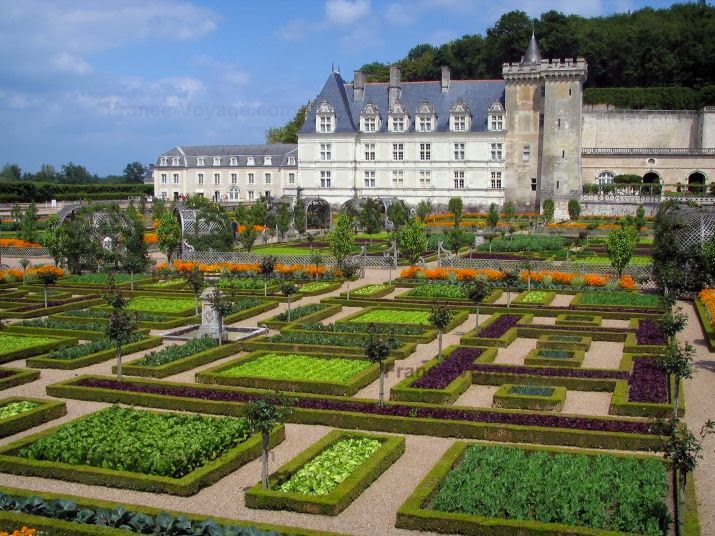
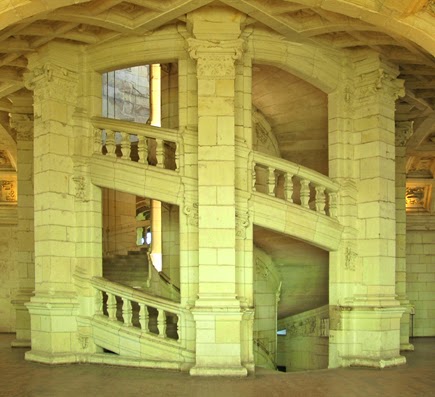
The Vallée de la Loire (literally the Loire Valley) is in Centre Region and the second most visited place in France after Paris. It is the region of enchanting castles and palaces. Known for its castles, it is also appreciated for its gardens, flowers and wines. Built on both sides of the river Loire and its affluents, the magnificent castles adorn the landscape. They merge with nature and their environment as if they grew together through the centuries. 

The Loire is the longest French river (1020 km). Rising in the Massif Central, it flows into the Atlantic Ocean. It is not surprising that this beautiful region has been appreciated by the Kings of France and their courtiers. There are more than 300 castles on this 200km long and 100km large area. The Loire Valley is called "the Garden of France" and "the birthplace of the French language".

This region is not only famous for its castles but also for its nature reserves. The fauna and flora one can discover along the Loire amazes the visitor. The central part of the Loire has been listed as an Unesco World Heritage site.


Tours is considered as the touristic capital city of the region, followed by Angers. However, Ambroise, Blois, Saumur, Beaugency have more historic monuments. It is impossible to visit all castles in the region. The most interesting are in Chambord, Chenonceau, Cheverny, Amboise, Blois, Ussé, Chinon, Beaugency, Chaumont, Azay-le-Rideau and Villandry.

 The Vallée de la Loire is one of the most beautiful place in Europe one must have visited. It's a pleasure to behold.


vendredi 10 janvier 2014

Bretagne


Brittany is one of the most interesting parts of France. We associate it with the sea and the legend about King Arthur. This region is located at the Brittany peninsula and at the Atlantic Ocean in the south-western France.
In Brittany there are many places that you will not be able to resist their charm, like long rocky coast with magic beaches and white and yellow sand, small houses in the old little fishing town.
You can see the ocean, which completely changes appearance in the rhythm of inflows and outflows also you can admire long sandy or rocky beaches. What is more, you can notice small bays and enormous, wild rocks.
While visiting Brittany you cannot be bored. On every step you will see cute cities with narrow alleys, stone homes or colorful shutters with many flowers.
Important point of exploring Brittany are the Celtics stones in Carnac, where on the large surface are located more than 3 thousands stones which are of unknown origin.
Small towns, which are worth visiting: La Gacilly, Pont Aven, Saint-Malo, Auray, Dinan, Fougéres, Quimper.
And of course noteworthy is the LE GOLF DU MORBIHAN. This is an internal sea (20km length and 15km width) with many islands and islets. 
 Brittany is said to be the far border of Europe, and it is confirmed by the fact that the furthest west part is called Finistère and that means “end of world”. It is really worthy going there and everybody will find something for themselves.

Exploring Brittany is a really feast for the eyes.


Bonifacio


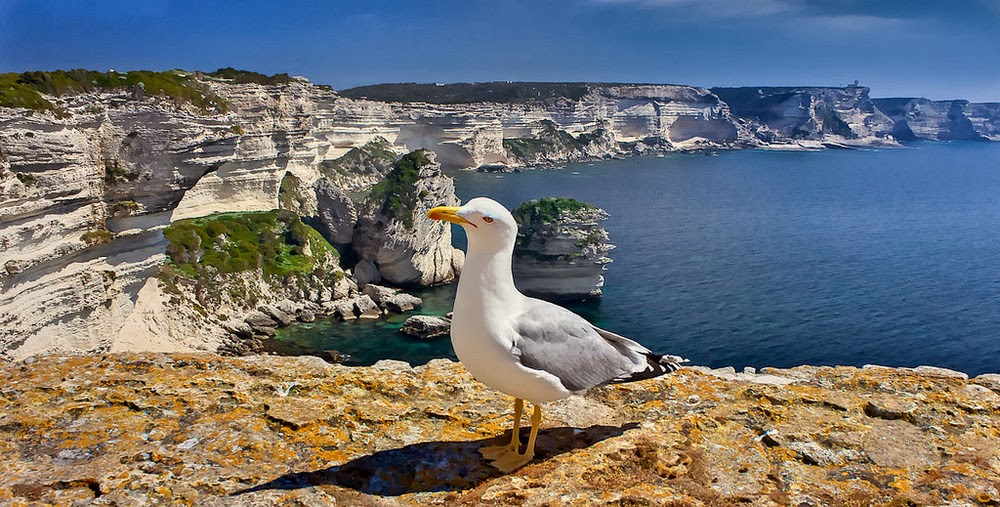
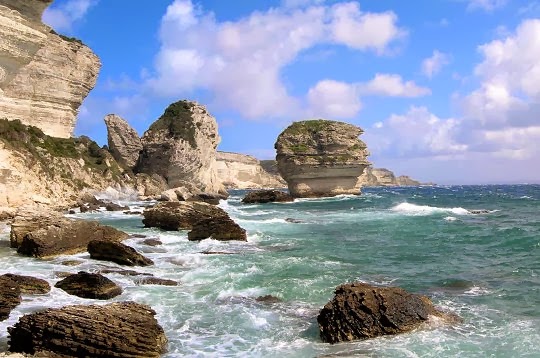
A beautifully located city – the most characteristic for the whole southern France – lies in the far southern part of Corse. It is situated on a narrow, long and unavailable headland with a beautiful sight on the sea. Surrounded by a wall, it makes an impression as if it was submerging into the water.
The precipice on which the city was built is made of limestone, which is rather unusual on Corse. Most of the land is made of granite.

In the city there is a harbour where ships can cruise and have connection with Sardinia. In Bonifacio itself it is worth to see its citadel with a tower, barracks, the Holy Bartelemy well and the famous king of Aragony stairs which were forged in stone to allow people to get to the well.

There is a 70 km shore around the city with a beach made of fine sand, many small gulfs and islands of various size. This area is included in the international sea park – a nature reserve. One may see here incredible fauna and flora both marine and continental. The sightseeing takes place only with a ship. Only then is it possible to fully admire the beauty of steep slopes which touch the seawater and the breath-taking landscape.

Places worth seeing are: the sea cave called ‘dragon’s cave’ – an isolated huge stone wall rising several dozen metres above water called ‘a grain of sand’ and, of course, an outstandingly beautiful sea bottom called ‘oriental carpet’.

A journey to Bonifacio is, above all, like a fascinating view of nature itself.


mercredi 8 janvier 2014

Paris


Paris is a separate department (75) and at the same time is a capital city of Ile-de-France region and the biggest aglomeration in France.

There are over 2 mln people in Paris and in the whole aglomeration – over 11 mln. Paris is divided into 20 districts.

Paris is the greatest attraction for tourists. It is said that Paris is the city of love. A tuneful language, romantic caffees and mysterious allees attract lovers. It is a wonderful city, also because of the fact that it is a capital of fashion, culture and art, with the Eiffel Tower dominating the city. Furthermore, it has a range variety of historical monuments and tourist attractions which can charm anyone.

No matter how many days one devotes to tour of Paris, it will still be too few. Enumerating interesting places would take a lot of time. A tourist has to limit himself.
The most important place is, of course, the world-famous Eiffel Tower, Notre-Damme chappel, the Louvre, the Arch of Triumph, Elysium, Sacre-Coeur basilica and Moulin Rouge near Pigal. It is also worth to take a tour by ‘bateau-mouche’ on Seine River, see the Pere-Lachaise cemetary or visit d’Orsay museum. Paris is visited by millions of tourists from all over the world each and every year.